


I Wasn’t Lazy—I Was Quietly Under-Hydrated
Table of Contents
I thought I had a motivation problem.
Mid-afternoon crashes. Brain fog. Random headaches. A weird irritability I couldn’t explain. I blamed my sleep. My schedule. My discipline.
But the truth?
I wasn’t lazy—I was quietly under-hydrated.
And the most frustrating part? I did drink water.
If you’ve ever felt tired for no clear reason, struggled to focus, or assumed you were just “off,” this might matter more than you think. The signs of dehydration aren’t always dramatic. You don’t have to feel intensely thirsty to be low on fluids.
In fact, mild dehydration symptoms are subtle enough that most people miss them.
Let’s talk about the signs I ignored—and why drinking water wasn’t enough.
Why Mild Dehydration Is So Easy to Miss
When people hear “dehydration,” they picture extreme thirst, dizziness, or heatstroke.
But mild dehydration can begin with as little as 1–2% fluid loss. That small shift is enough to affect mood, cognitive performance, and energy levels.
The tricky part?
Thirst is a delayed signal.
By the time you feel thirsty, your body has already started compensating. Blood volume decreases slightly. Your heart works a little harder. Your brain becomes a bit more sensitive to discomfort.
That’s why low hydration signs often feel like personality flaws:
- “I’m just unmotivated.”
- “I’m bad at focusing.”
- “I must not be disciplined.”
But what if your biology is just under-resourced?
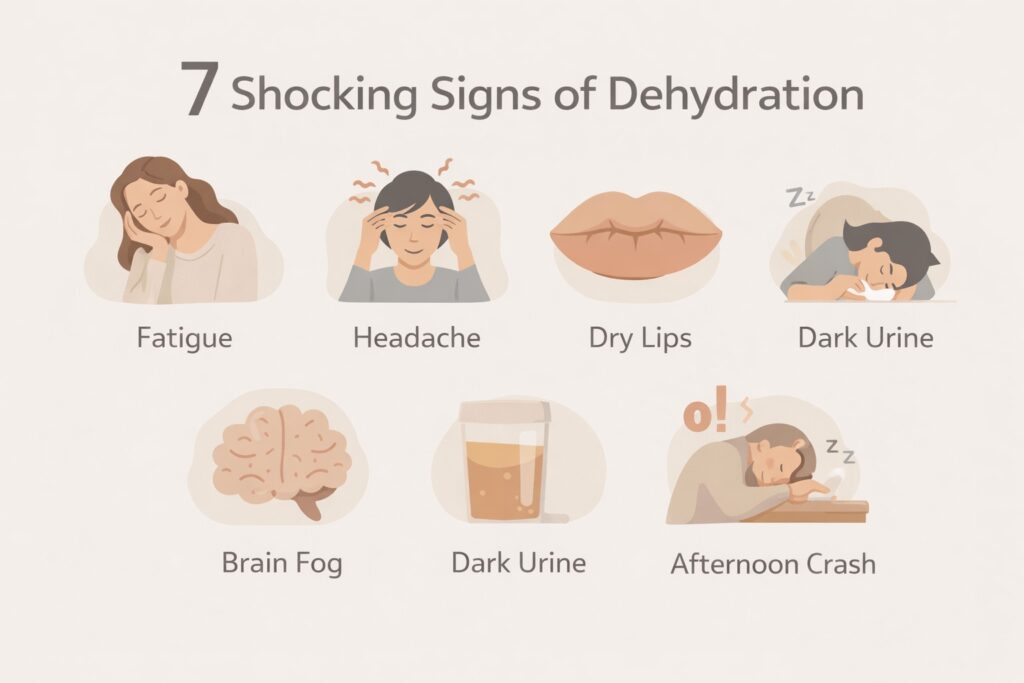
7 Shocking Signs of Dehydration I Ignored
1. Constant Fatigue That Sleep Didn’t Fix
I would sleep 7–8 hours and still wake up exhausted.
Hydration plays a major role in circulation. When fluid levels dip, blood volume can decrease slightly. That means less efficient oxygen delivery to tissues—including your brain and muscles.
The result?
You feel sluggish before the day even starts.
Mild dehydration symptoms often mimic sleep deprivation. But instead of needing more rest, you may need more consistent fluid intake.
2. Brain Fog That Felt Like Burnout
I reread emails three times. I struggled to find simple words. My thoughts felt… slower.
Research shows even mild dehydration can impair attention, short-term memory, and mental clarity.
Your brain is about 75% water. Even small drops in hydration can impact how efficiently it functions.
And here’s the twist:
It doesn’t always feel like thirst. It feels like “I can’t think straight.”
3. Random Headaches That Came Out of Nowhere
I assumed my headaches were stress-related.
But dehydration headaches are common—and sneaky.
When fluid levels drop, the brain can temporarily contract slightly from fluid loss, increasing sensitivity to pain. You might experience:
- Dull tension headaches
- Pressure behind the eyes
- Neck tightness
If your first instinct is painkillers instead of water, this sign of dehydration is easy to miss.
4. Dry Lips (But Not a Dry Mouth)
This one surprised me.
My mouth felt fine. I wasn’t thirsty. But my lips were constantly dry.
Dry lips are often an early external signal of low hydration. Skin elasticity can also decrease when fluid intake is inconsistent.
If you’re constantly reapplying lip balm, it may be more than weather.
5. The 2–4 PM Crash That Felt Like a Personality Flaw
Every afternoon, without fail, I would crash.
Not sleepy. Not exactly hungry. Just drained.
This is one of the most common low hydration signs.
You lose fluids steadily throughout the day—from breathing, talking, digestion, caffeine intake, and even mild temperature changes.
If you don’t replace fluids consistently, that deficit builds up. And it often peaks mid-afternoon.
We blame productivity.
But sometimes it’s just biology.
6. Irritability Over Small Things
I noticed I was more reactive on days I felt “off.”
Mild dehydration symptoms can affect mood regulation. Studies have linked low hydration to increased tension, anxiety, and fatigue.
When your body is under stress—even mild fluid stress—it shifts into conservation mode.
Small inconveniences feel bigger.
7. Darker Urine (That I Pretended Not to Notice)
The simplest hydration test?
Urine color.
Pale straw = well hydrated.
Dark yellow = you need more fluids.
I knew this. I just didn’t consistently pay attention.
Sometimes the signs of dehydration are hiding in plain sight.
Why Drinking Water Wasn’t Enough
Here’s the uncomfortable truth:
You can drink water and still feel under-hydrated.
That was my mistake.
1. I Drank It All at Once
I’d chug a big glass in the morning and assume I was covered.
But hydration works best when it’s spaced out. Your body absorbs and eliminates fluids based on immediate need. Large amounts at once can increase urination without optimizing cellular hydration.
Consistency beats volume.
2. I Drank a Lot of Coffee
Caffeine isn’t massively dehydrating—but it does have a mild diuretic effect, especially if your intake is high.
If you’re drinking multiple cups daily, you’re increasing fluid turnover.
And if you’re not compensating gradually, you may stay slightly behind.
3. I Ignored Electrolytes
Water doesn’t work alone.
Electrolytes like sodium, potassium, and magnesium help regulate fluid balance and allow your cells to retain and use water properly.
If you drink large amounts of plain water without adequate electrolytes, you may not feel fully hydrated.
This doesn’t mean sports drinks loaded with sugar.
It means balance.
The Electrolyte Mistake Most People Make
People hear “electrolytes” and assume:
- It’s only for athletes.
- It requires neon-colored drinks.
- It’s unnecessary for everyday life.
But modern life increases fluid loss in subtle ways:
- Heated and air-conditioned environments
- High-protein diets
- Stress
- Light daily sweating
- Frequent caffeine use
A small pinch of mineral salt in water or an unsweetened electrolyte mix can dramatically improve how you feel—especially if you experience lightheadedness or fatigue.
Hydration isn’t just about quantity.
It’s about absorption.
How to Fix Dehydration Without Turning It Into a Full-Time Job
You don’t need a gallon jug.
You need rhythm.
Step 1: Habit-Stack Your Fluids
Tie hydration to things you already do:
- One glass after brushing your teeth
- One before your first coffee
- One with every meal
- One mid-afternoon
No apps. No obsessive tracking.
Just anchors.
Step 2: Eat Your Water
Hydration doesn’t only come from drinks.
High-water foods include:
- Cucumbers
- Oranges
- Watermelon
- Yogurt
- Leafy greens
These support fluid balance naturally and provide minerals that assist absorption.
Step 3: Front-Load, Don’t Back-Load
Drinking most of your fluids at night disrupts sleep.
Aim to consume the majority before early evening. This prevents overnight wake-ups and morning dehydration.
Step 4: Use the “Energy Check” Test
When you feel:
- Sluggish
- Foggy
- Irritable
Drink a full glass of water and wait 20 minutes before reaching for caffeine.
You’ll be surprised how often that’s enough.
A Simple, Realistic Hydration Routine That Actually Sticks
Here’s a balanced daily example:
Morning:
- 12–16 oz water upon waking
- Optional pinch of mineral salt
Late Morning:
- 8–12 oz between tasks
Lunch:
- 8–12 oz with meal
Mid-Afternoon:
- 8–12 oz before caffeine
Dinner:
- 8 oz
Total: roughly 60–80 oz depending on body size and activity level.
No extremes.
Just consistency.
When It’s Not Just Dehydration
Hydration helps—but it’s not magic.
If fatigue persists despite consistent fluid intake, consider:
- Iron deficiency
- Thyroid imbalance
- Chronic sleep deprivation
- High stress load
Sometimes dehydration is part of the puzzle—not the whole picture.
If symptoms are severe (dizziness, rapid heartbeat, confusion), seek medical care immediately.
The One Question That Changed Everything
Instead of asking:
“Why am I so lazy?”
Ask:
“Am I under-fueled or under-hydrated?”
That small shift removes shame.
It turns self-criticism into self-awareness.
And sometimes, the difference between exhaustion and clarity is just consistent hydration.
You’re not broken.
You might just be dry.
External resources (DoFollow)
Robert Cialdini’s work on reciprocity (Influence): https://www.influenceatwork.com/principles-of-persuasion/
LinkedIn help docs on engagement basics and best practices: https://www.linkedin.com/help/linkedin/